
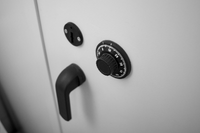
Safes
Safe Opening And InstallationIn London, By A SpecialistTrained To Open Them.
Lost combination, dead battery, jammed boltwork or a safe inherited with no key — most safes can be opened and returned to service rather than destroyed. And a new safe is only as good as the way it is anchored, which is where most installations fail.
25 years in London · Trained by safe cracker Terry Staddon · 24/7, 365 days
25 years
Serving London
30 mins
Typical response
24/7 · 365
Always available
3 years
Warranty on work & locks
From £48
Priced before we travel
Overview
Safe work, and why it is a specialism
Safe work splits into three: opening a safe you cannot access, servicing one that is becoming unreliable, and installing one so it is genuinely fixed to the building. Each needs specific knowledge, because safes are built to resist exactly the improvisation that works on other hardware.
This is one of our core specialisms. Chris Evans, who owns The Bow Locks, was trained by the renowned ex-locksmith and safe cracker Terry Staddon, and safes sit alongside gaining entry and evictions as the areas the team is deepest in. That background is the difference between opening a safe and wrecking one.
Method selection is the whole job. Manipulation, combination recovery, override routes and — where nothing else is available — controlled drilling to a precise point followed by repair, which returns the safe to full working condition afterwards. Randomly attacking a safe body destroys a unit worth more than the job and often the contents with it.
Who this is for
- Households and businesses locked out of a safe by a lost key or forgotten code
- Executors and solicitors dealing with a safe in a probate property
- Shops, offices and hospitality sites with cash safes or deposit units
- Landlords and agents who have inherited a safe with no keys in a let property
- Anyone buying a safe who wants it installed so it cannot simply be carried out
Answered 24/7 · From £48
Leave it and it gets worse
What happens when a safe is tackled the wrong way
Safes are designed to defeat force, and they usually win. Angle grinders, crowbars and random drilling generate heat and damage that can weld relockers into place, jam the boltwork solid and make a subsequent professional opening far harder and far more expensive. Some safes have glass relockers precisely to punish this approach.
The contents are the bigger risk. Deeds, passports, jewellery, cash floats, keys to other properties and business records live in safes. Heat, metal swarf and fire-suppressant insulation dust do not co-exist well with paper documents, and a destroyed safe is often opened only to find the contents damaged too.
Then there is the replacement cost. Many safes can be opened and repaired for a fraction of what a replacement of equivalent cash or valuables rating costs, especially heavier fire-rated units. Destroying one to save a call-out fee is expensive arithmetic.
Common mistakes
- Attacking the door or hinges with a grinder or bar and triggering the relocker
- Repeatedly entering guessed combinations on an electronic lock until it lockouts or the battery dies mid-attempt
- Replacing batteries incorrectly on an electronic keypad and losing the code
- Standing a safe on the floor unbolted, so the whole unit is simply carried away
- Bolting a safe through a hollow floor or a stud wall where the fixings pull straight out
Our process
Five steps, priced before we start
01
Identify the safe and the fault
Make, model, lock type — key, mechanical dial or electronic — and the exact symptom. Photos in advance often let us arrive with the right parts and the right approach already decided.
02
Diagnose the route in
Dead battery, failed solenoid, worn key lock, jammed boltwork, lost combination or a triggered relocker all lead to different methods. We tell you the method and the price before starting.
03
Open with the least invasive method available
Manipulation, combination recovery or override first. Where drilling is the only route, it is done to a precise point rather than through the body, protecting the safe and the contents.
04
Repair, service and verify
Drill points plugged and made good, lock replaced or serviced, boltwork lubricated and the safe cycled repeatedly open and closed to confirm it is reliable, with a new code or key set for you.
05
Sign-off, warranty and keys handed over
You get every key that works the lock, a clear price with no surprise additions, and our 3-year warranty on the work and the locks we fitted. All payment types are accepted at the door.
What you get
Concrete outcomes, not adjectives
The safe usually survives
Correct method selection means most safes are returned to full working order rather than replaced.
Contents protected
Precise entry avoids the heat, swarf and insulation damage that destroys documents and valuables.
Specialist training behind it
Safes are a declared specialism here, led by an owner trained by ex-locksmith and safe cracker Terry Staddon.
Installed so it cannot be carried out
Anchoring into sound concrete or masonry is what turns a safe from a heavy box into actual security.
Available out of hours
24/7, 365 days a year — useful when a cash safe fails at closing time or before a trading day.
Warranted work
Locks and parts we fit to a safe carry our 3-year warranty, the same as our door work.
In detail
Safe types, lock types, installation and servicing
Key, mechanical dial and electronic locks
Key-locked safes use high-security double-bitted or lever locks; lost keys are often recoverable by picking or by key-to-code replacement rather than drilling. Mechanical dial locks — the classic three or four wheel combination — can frequently be manipulated open by an experienced hand, and can be recombinated afterwards to a code you choose.
Electronic locks fail differently. Flat batteries, corroded contacts, failed solenoids and keypad wear account for most call-outs, and the fix is often a straightforward lock replacement rather than an opening job at all. Repeated wrong entries trigger penalty lockouts, so guessing makes the problem worse rather than better.
Relockers, hardplate and why method matters
Better safes include hardplate over the lock area and relockers — secondary bolts held by a glass plate or a spring device that fire if the safe is attacked, permanently locking the boltwork. They exist specifically to defeat improvised entry, and they are entirely capable of turning a recoverable safe into scrap.
A specialist works around these features rather than into them, drilling only where the design allows and repairing the point afterwards so the safe retains its integrity. This is the practical reason a professional opening costs less than a destroyed safe plus a replacement.
Installation, anchoring and siting
A safe that is not fixed down is a container with a handle. Most units are supplied with base or back fixing holes and must be bolted into solid concrete or masonry with appropriate anchors. Fixing into floorboards, chipboard or a stud wall gives an attacker leverage and a route out with the whole safe.
Siting affects both security and fire performance. Corners with two solid walls restrict access to the door and to prying angles; fire-rated units need the manufacturer's guidance followed on floor construction and clearances to keep their rating meaningful. Cash and valuables ratings should be matched to what is actually stored and to what your insurer requires.
Residential versus commercial safes
Domestic safes are typically small fire-rated or valuables units holding documents, passports, jewellery and spare keys. The most common issues are lost keys, forgotten codes and safes inherited with a property — all routine work, and often resolvable without any drilling at all.
Commercial safes see daily use: cash deposit safes with a chute so staff can deposit without opening, time-delay locks, multi-user electronic locks and heavier grade units in retail and hospitality. Servicing matters far more here because a failure interrupts trade, and regular lubrication and lock checks prevent most emergency openings.
Questions
Safes in London — your questions answered
How much does it cost to open a safe in London?
Prices start at £48 and depend on the safe, the lock type and the method needed. We confirm the price before starting, and all payment types are accepted.
Can you open a safe without destroying it?
In most cases, yes. Manipulation, combination recovery and override routes come first. Where drilling is unavoidable it is done precisely and the safe is repaired afterwards so it remains usable.
I have lost the combination to a dial safe. Is that recoverable?
Often, yes. Mechanical dial locks can frequently be manipulated open, and the safe can then be recombinated to a code you choose.
The keypad is dead. Is the safe broken?
Usually just the battery, contacts or solenoid. Electronic lock faults are among the most common safe call-outs and are often fixed by replacing the lock unit rather than by an opening job.
How long does a safe opening take?
Anything from minutes to a couple of hours depending on the grade of safe, the lock and whether a relocker has been triggered. We give you a realistic estimate once we know the make and model.
Can you install a new safe for me?
Yes — including advising on the right grade for what you are storing, siting it sensibly, and anchoring it into solid concrete or masonry so it cannot be removed.
Do safes need servicing?
Yes, particularly in commercial use. Boltwork lubrication, lock checks and battery replacement prevent most emergency openings and extend the working life of the unit considerably.
Do you attend out of hours for a business safe?
Yes. We work 24 hours a day, 365 days a year across London with a typical 30-minute response.
Is the work guaranteed?
Any lock or parts we fit carry our 3-year warranty on parts and labour.
Related services
Areas we cover
Based in E16 4RF, London, covering London. Back to the homepage or request an estimate.
Get into the safe without losing the safe
A specialist trained by one of the country's best-known safe crackers, the least invasive method available, and a unit that works properly afterwards. From £48, across London, 24 hours a day.
- City & Guilds qualified
- DBS-checked locksmiths
- 3-year warranty